
Public sector lenders Canara Bank, Corporation Bank and Allahabad Bank have decided to lower interest rates on housing loans, preferring to keep their prime lending rates (PLRs) unchanged. ICICI Bank Managing Director and Chief Executive Officer K V Kamath has indicated that the country's second largest bank would review interest rates only in 2008-09.
At least two public sector banks Union Bank of India and Indian Overseas Bank have quietly increased interest rates on short-term deposits to raise resources and manage asset-liability mismatch. Union Bank has announced a special deposit scheme for 400 days, which offers 9 per cent interest. The scheme was launched much before the announcement of the monetary policy. Chennai-based Indian Overseas Bank has also raised rates for large deposits.
This comes after the arrest of Syndicate Bank Chairman S K jain.
Finance Minister Chidambaram has summoned chiefs of public sector banks on May 1. This meeting will be held 2 days after the annual credit policy to review their financial performance in 2007-08. The move is being seen in banking circles as a message from the Centre to ensure that the public sector does not take interest rate cues from the central bank alone. Detailed agenda of the meeting has not been circulated. Bankers are waiting for signals from the RBI's monetary policy

Amid stiff competition from private and foreign players, the country's 27 public sector banks logged 35 per cent growth in profit at Rs 16,546 crore (Rs 165.46 billion) while their bad assets fell below 3 per cent during 2003-04.
Public sector banks may be allowed to recruit talented middle-level management executives of other banks at an attractive pay package so as to improve their productivity.

Jaitley said there was a need for the banking sector to fund infrastructure and manufacturing sectors to support the ambitions of higher growth.

Among Sensex firms, Trent, ICICI Bank, Tech Mahindra, Bajaj Finserv, Mahindra & Mahindra, Power Grid, Tata Consultancy Services and Bajaj Finance were the major laggards. However, Tata Steel, Larsen & Toubro, State Bank of India, Kotak Mahindra Bank were among the major gainers.
The Centre on Monday said nationalised banks, which were provided equity as part of capital restructuring need not return it.

Employees of public sector banks (PSBs) on Thursday went on two-day strike against the move to privatise public sector banks impacting normal banking operation across the country. Many branches across different parts of the country were shut as the United Forum of Bank Union (UFBU), an umbrella body of nine bank unions including All India Bank Officers' Confederation (AIBOC), All India Bank Employees Association (AIBEA) and National Organisation of Bank Workers (NOBW) had given two day strike call. As a result, services such as deposits and withdrawal at branches, cheque clearance and loan approvals might be affected due to the strike. But ATMs are expected to function as usual.
Public sector banks want to pass on the increasing cost of funds to borrowers across the board, but are unwilling to take the plunge right away.

'Those betting against PSUs will likely be punished in this upswing.'

Anup Roy and Krishna Kant on the challenges the public sector banks face in revitalising themselves

The government has said that public sector banks have asked for much more capital than it can give.
The government will soon finalise a reshuffle of top management teams in the country's leading 11 public sector banks (PSBs), 10 of which are listed on the stock exchanges. They include the country's third largest bank, Canara Bank, and fifth largest bank, Bank of Baroda.
A host of public sector banks had cut interest rates in the earlier part of this year following an advisory from Finance Minister P Chidambaram in January. Private and smaller state-owned banks, however, did not cut rates.
In a move that is likely to attract political controversy, the committee on financial sector assessment has recommended that the banking sector should be gradually opened to foreign players and that the government lower its shareholding in public sector banks below 51 per cent and allow state-owned players to merge if the Centre's stake cannot go below the prescribed lower limit.
The move comes even as Bank of India on Wednesday said its corporate clients will suffer mark-to-market losses of around Rs 125 crore. It has 34 clients with 74 derivative transactions. Last week, State Bank of India said its clients may incur MTM losses of up to Rs 700 crore at the end of March 2008.

The move to make the appointment process more robust comes after last month's arrest of S K Jain, chairman and managing director of Syndicate Bank last month, over graft charges.
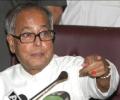
Finance Minister Pranab Mukherjee will meet chiefs of public sector banks here on Saturday, at a time when industrial growth has decelerated to a 13-month low of 7.1 per cent and interest rates have moved northward.

While near-term performance is difficult to predict after a huge run-up, fund managers believe the PSU theme's prospects remain sound over the medium to long term.

SBI remains a favourite of most brokerages in the PSB segment.
Public sector banks have asked the Centre to intervene as talks with bank unions for allowing half of their employees a second chance to opt for pension instead of provident fund have reached a deadlock.

Banks, including country's largest lender State Bank of India, have informed the customers well in advance about the likely inconvenience due to strike.
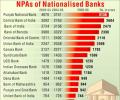
Reckless lending during the three years of the retail credit boom beginning 2003-04 is hurting public sector banks hard.
Delhi International Airport Ltd, the five-company consortium led by Bangalore-based infrastructure conglomerate GMR Group that is upgrading Delhi airport, has managed to raise over Rs 1,000 crore (10 billion) to meet its financial obligations for the Rs 8,890-crore (80 billion) project.
Public sector banks, in a frenzy to cash in on the retail credit boom during the three years beginning 2003-04
Public sector banks have suddenly developed cold feet on raising lending rates even if it means sacrificing on their bottom lines.

The nation-wide strike call has been given by United Forum of Bank Unions, consisting of nine national level unions, including AIBEA, NCBE, BEFI, INBEF, NOBW and AIBOC.

The UFBU is an umbrella body of nine bank employees unions of the country and claims to have members from public, private and foreign banks. "We are on strike from today as Indian Banks' Association did not concede to the bank unions demand for the wage hike," said United Forum of Bank Unions convener C H Venkatachalam.

India's corporate bond market, driven by public sector undertaking (PSU) banks and financial institutions last year, is losing momentum since the second quarter of FY26.
